
 Persian
 Arabic
 Russian


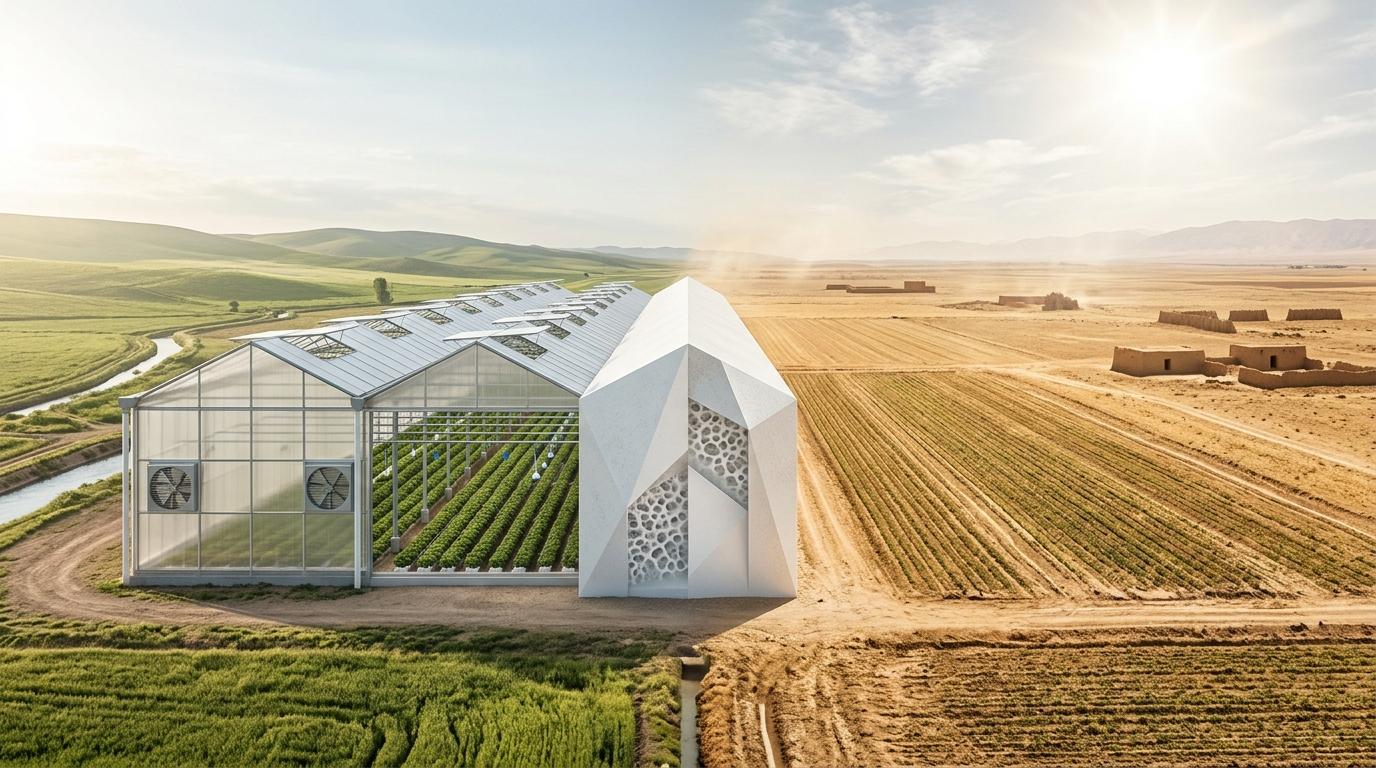
In Iraq, summer does not simply change the weather.
It changes the rules of agriculture.
As temperatures begin to rise, many growers focus on what happens above the surface: leaf stress, irrigation frequency, greenhouse temperature, or fertilizer adjustments. But in reality, the first serious agricultural failures of summer often begin where no one can see them clearly:
in the root zone.
This is why the weeks before peak heat are more important than many growers realize.
Because once extreme heat arrives, weak growing systems do not improve — they become exposed.
In this context, perlite is no longer just a growing medium component.
For many Iraqi growers, it is becoming part of a pre-summer protection strategy.
Iraq’s Summer Is Not Just Hot — It Is Operationally Expensive
Every agricultural system in Iraq pays a price during summer.
That price may appear in different forms:
- higher irrigation demand,
- faster root stress,
- more salinity pressure,
- reduced nutrient efficiency,
- greenhouse instability,
- and greater production risk.
In such conditions, the cost of a weak substrate becomes much higher than the cost of a good one.
This is a critical point that many growers underestimate.
A crop may enter late spring looking healthy.
The greenhouse may seem under control.
The fertigation plan may appear technically correct.
But if the root zone cannot maintain air, moisture balance, and structural stability under rising temperatures, the whole system becomes more fragile with every hotter day.
In Iraq, summer does not forgive root-zone mistakes.
The Hidden Problem: Most Heat Damage Starts Below the Surface
When farmers and technicians think about heat stress, they often think about leaves burning, fruit quality declining, or irrigation cycles increasing.
But heat pressure affects plants earlier and more quietly in the root environment.
As temperatures rise, roots become more sensitive to:
- oxygen shortage,
- excess water retention,
- compaction,
- salt accumulation,
- and unstable substrate behavior.
This means that even before visible damage appears, the plant may already be losing efficiency below the surface.
And once the root zone becomes unstable, every other intervention becomes weaker:
- fertilizer performs less efficiently,
- water management becomes less predictable,
- plant recovery slows down,
- and production consistency starts to decline.
This is exactly why pre-summer root-zone management matters so much in Iraq.
Why Perlite Becomes More Valuable Before Summer
Many agricultural materials are chosen based on immediate function.
Perlite should be chosen based on seasonal pressure.
Its value becomes more visible when the system is under stress.
1. Perlite helps maintain air-filled porosity when temperatures rise
In hot conditions, roots need not only water, but also oxygen. A substrate that becomes too dense or too wet can quickly create stress around the root system. Perlite helps preserve air space inside the root zone, which is essential during high-temperature periods and frequent irrigation cycles.
2. It supports more stable moisture behavior
In Iraq, summer irrigation often becomes more intense and more frequent. If the substrate behaves inconsistently, root conditions change too rapidly. Perlite helps create a more balanced structure, making moisture behavior more manageable and less chaotic.
3. It reduces the severity of salinity stress
In many Iraqi production systems, water quality is not ideal. As evaporation rises in warmer periods, salt pressure becomes more dangerous. Perlite contributes to better drainage and reduces the risk of root-zone salt concentration compared with heavier or poorly aerated media.
4. It improves the efficiency of expensive agricultural inputs
When fertilizer prices are high and irrigation costs matter more, inefficiency becomes expensive. A stronger root environment helps the crop use water and nutrients more effectively. That makes perlite relevant not only agronomically, but economically.
Why This Matters for Greenhouses in Iraq
Greenhouses are often seen as a solution to climate pressure.
But in Iraq, summer can turn them into high-risk systems if the root zone is weak.
Inside a greenhouse, problems scale faster:
- heat accumulates,
- irrigation decisions become more sensitive,
- salts can build up more quickly,
- and root stress affects the whole crop uniformly.
That is why greenhouse growers should not enter summer with unstable media.
Perlite is especially valuable in greenhouse and protected cultivation because it helps growers build a system with more control and less hidden risk.
This matters for:
- cucumber production,
- tomato greenhouses,
- pepper cultivation,
- seedling nurseries,
- hydroponic or semi-soilless systems,
- and all intensive growing environments where root health drives productivity.
In such systems, perlite is not just about growth.
It is about maintaining system behavior under pressure.
Summer Preparation in Iraq Should Start with the Root Zone, Not the Symptoms
One of the biggest mistakes in hot-climate agriculture is reacting too late.
Many growers wait until the crop begins showing visible stress:
- wilt,
- reduced vigor,
- uneven growth,
- lower fruit quality,
- or nutrient imbalance.
But by that time, the system is already struggling.
The smarter approach is to prepare the root environment before summer stress peaks.
That means asking practical technical questions early:
- Is the substrate too dense?
- Does it drain well enough?
- Is there enough oxygen around the roots?
- Will it behave predictably under repeated irrigation?
- Can it reduce the impact of salinity during hotter weeks?
This is where perlite becomes a strategic material, not a decorative addition.
In Iraq, Better Summer Performance Starts with Better Decisions in Spring
The growers who perform better in summer are usually not the ones who react faster.
They are the ones who prepared earlier.
This is especially important in Iraq, where the transition from mild conditions to severe heat can happen quickly. Waiting until full summer arrives often means paying a higher price in stress, inefficiency, and yield instability.
Perlite matters in this transition period because it allows growers to strengthen the root zone before the most difficult part of the season begins.
And that is the real opportunity: not just helping plants grow,
but helping the production system stay stable when conditions become harsher.
Conclusion: In Iraq, Perlite Is a Pre-Summer Risk Strategy
For Iraqi agriculture, the move toward summer is not just a seasonal shift.
It is a stress test.
And stress tests reveal system weaknesses.
This is why perlite deserves more attention in Iraq before summer begins.
Its real value is not simply that it is lightweight or widely used.
Its value is that it helps create a more stable, breathable, and manageable root environment at the exact time when crops need it most.
In a season where heat, salinity, water pressure, and rising costs can combine into serious production risk, perlite becomes more than a substrate component.
It becomes part of a smarter agricultural strategy.
And in Iraq, smarter summer strategy often starts below the surface.
CTA | Free Consultation for Iraqi Growers and Agricultural Experts
If you are preparing for the summer season in Iraq and want to evaluate whether perlite is the right choice for your greenhouse, nursery, or intensive cultivation system, Mayadasht experts are ready to help.
We can help you assess:
- whether perlite fits your crop and production conditions,
- which grade or structure may be more suitable,
- how to use it more effectively under Iraqi water and climate conditions,
- and how to avoid costly mistakes before buying.
Free Technical Consultation
Our specialists provide free expert guidance to help you make a more confident and practical decision.
👉 Contact Mayadasht to discuss the right perlite solution for your summer growing strategy in Iraq.