
 Persian
 Arabic
 Russian



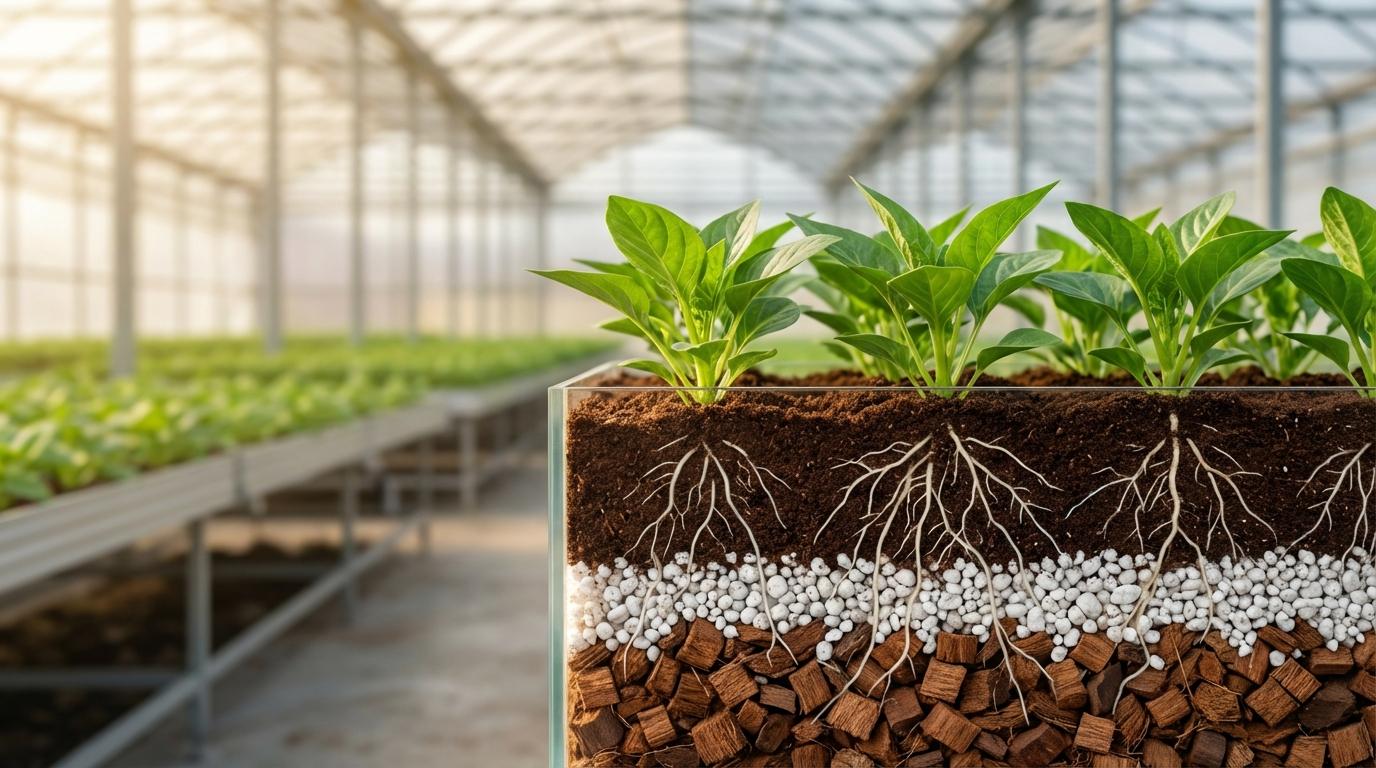
In Iraq’s agricultural systems, spring does not arrive gently.
Temperature rises are often sudden, water demand increases rapidly, and root systems are forced to adapt under pressure.
By the time heat becomes visible above ground, the most important decisions have already been made—below the surface.
Root zones formed at the end of winter determine whether crops will remain stable or struggle throughout the spring cycle.
The Critical Transition Period: Late Winter to Early Spring in Iraq
Unlike temperate regions, Iraq experiences a compressed seasonal transition.
The window between cool winter conditions and early heat stress is short.
During this period:
- soil moisture patterns change quickly
- oxygen availability around roots becomes unstable
- microbial activity accelerates
If growing media are not structurally prepared in advance, root stress appears before visible symptoms emerge.
Why Root Systems Fail First in Early Spring
Root failure in spring is rarely caused by nutrients.
It is primarily physical.
Common early‑spring root problems in Iraq include:
- oxygen deprivation due to compacted media
- uneven water distribution after increased irrigation
- thermal stress amplified by poor drainage
These problems develop quietly in late winter and reveal themselves only when correction is difficult.
Structural Preparation: The Overlooked Step Before Spring
Preparing growing media before spring is not about adding inputs.
It is about restoring physical balance in the root zone.
Three structural factors must be addressed:
- Aeration – ensuring oxygen remains available under higher irrigation frequency
- Drainage stability – preventing waterlogging as evapotranspiration rises
- Moisture buffering – avoiding rapid wet‑dry cycles
Perlite, cocopeat, and coco chips each play distinct roles in this balance.
Perlite: Maintaining Oxygen When Temperatures Rise
As spring temperatures increase, oxygen demand at the root level rises sharply.
Perlite maintains permanent air spaces within the growing medium, even under frequent irrigation.
In Iraqi greenhouse and open systems, perlite:
- prevents root suffocation during early heat spikes
- stabilizes structure in heavy or collapsing media
- reduces anaerobic stress during irrigation adjustments
Its value lies in consistency, not yield stimulation.
Cocopeat: Moisture Control Requires Quality, Not Volume
Cocopeat is widely used across Iraq, but its performance in spring depends on preparation quality.
Well‑buffered cocopeat:
- releases moisture gradually
- supports early root expansion
- reduces salinity shock as irrigation increases
Poorly processed cocopeat, however, can retain excess salts and become unstable during the spring transition, amplifying root stress.
Coco Chips: Structural Support Against Moisture Fluctuations
Coco chips are often overlooked, yet they play a critical role during early spring.
Their coarse structure:
- improves vertical drainage
- reduces compaction in mixed substrates
- protects roots from sudden moisture swings
In systems where irrigation frequency changes rapidly, coco chips help preserve physical stability.
Timing Matters More Than Application Rate
One of the most common mistakes in Iraq is waiting until visible stress appears.
By then:
- root architecture is already compromised
- microbial imbalance has developed
- corrective actions become reactive and costly
Preparing and adjusting growing media before spring irrigation patterns shift is far more effective than mid‑season correction.
Strategic Perspective for Agricultural Decision‑Makers
For agricultural experts and greenhouse managers, spring success is not defined by inputs added in March or April.
It is defined by:
- root decisions made weeks earlier
- structural readiness before heat
- media stability under changing water demand
In Iraq’s climate, proactive root‑zone management is not optional—it is strategic risk control.
Final Insight
Roots do not respond to calendars.
They respond to structure, oxygen, and moisture behavior.
In Iraq, where spring arrives fast and pressure escalates quickly,
those who prepare growing media before heat arrives protect both crop performance and system predictability.