
 Persian
 Arabic
 Russian

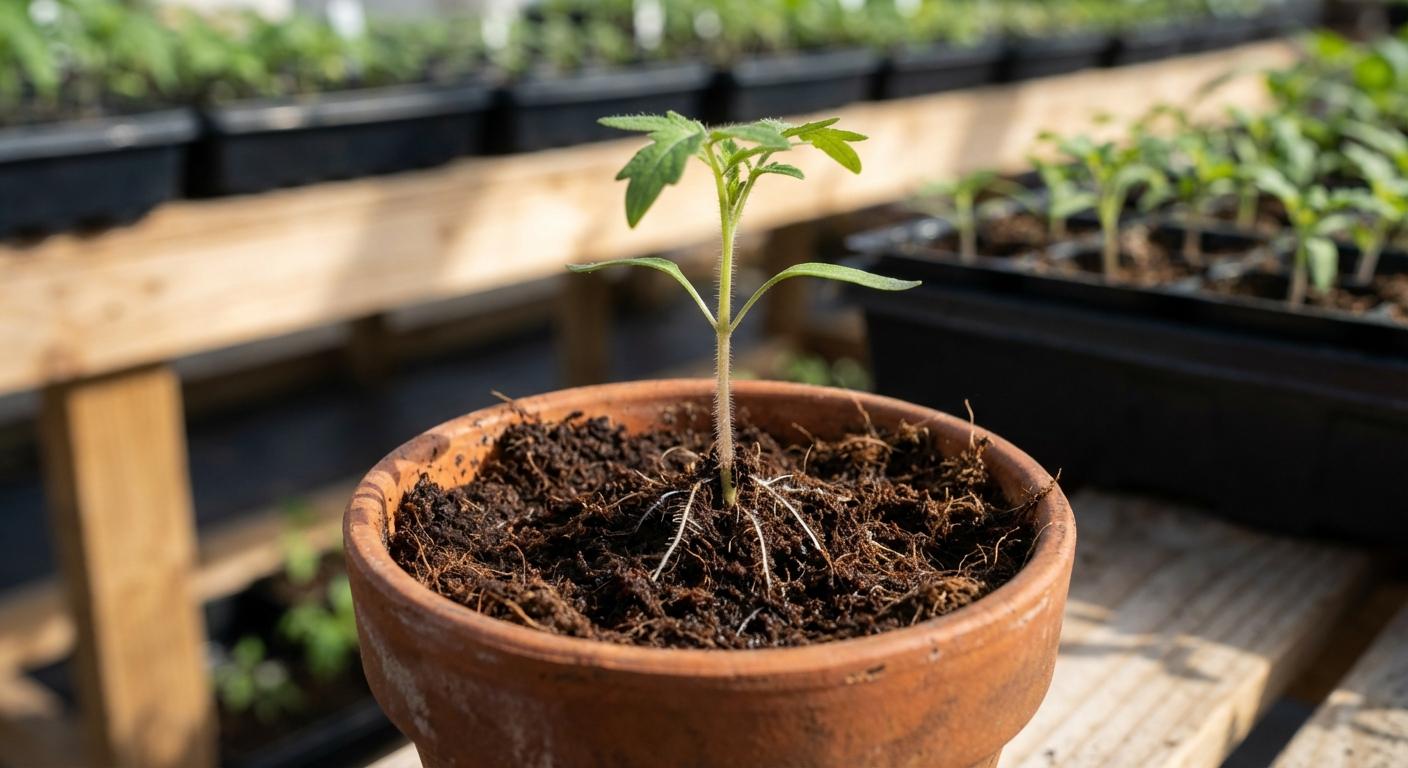
In modern agriculture across Arab countries, the most critical phase in the life of any crop is not harvest—it is the seedling stage.
A large percentage of crop failures, low yield, and uneven growth can be traced back to one simple fact: weak or stressed seedlings.
For traders, greenhouse investors, and the new generation of Arab farmers, this early stage is not just a technical point; it is a risk factor that directly affects profit, reliability of supply, and long-term reputation in the market.
This is where peat moss stops being “just a soft growing medium” and becomes a practical risk‑management tool.
1. Understanding Risk at the Seedling Stage
Before talking about peat moss, it is important to understand the main risks that seedlings face in nurseries and greenhouses:
- Uneven germination
- Damping-off and root diseases
- Irregular moisture (too dry / too wet)
- Nutrient stress and pH problems
- Transplant shock when moving to field or greenhouse
Each of these factors can cause:
- Loss of a large percentage of seedlings
- Non-uniform growth, making management harder
- Higher need for replanting
- Delayed harvest and lower yield
For commercial projects, that means lost money and lost time.
Peat moss can significantly reduce many of these risks when used correctly.
2. Why Peat Moss Is Different from Ordinary Soil
Traditional soil or random local mixtures often have:
- Unknown structure
- Unstable pH
- Variable organic matter
- Possible weed seeds and pathogens
In contrast, high-quality peat moss offers:
- Uniform texture
- Stable and slightly acidic pH (typically around 5.5–6.5)
- High water-holding capacity with good aeration
- Usually low pathogen load, especially in professional horticultural grades
This consistency is exactly what is needed in a professional nursery system, where every tray, every cell, and every seedling must behave in a predictable way.
3. Moisture Management: Reducing the Risk of Drought and Overwatering
One of the biggest threats to seedlings in hot and dry climates is fluctuating moisture.
If the medium dries too quickly, the tiny root has no chance to recover.
If it stays too wet, roots suffocate and diseases spread.
Peat moss helps stabilize this balance:
- Its fine structure holds water evenly around the seed and young root.
- At the same time, it contains enough air spaces to avoid waterlogging.
- It buffers short-term mistakes in irrigation scheduling, which often happen in busy nurseries.
For Arab agriculture, where temperatures can be high and evaporation strong, this moisture-buffering effect is a powerful way to reduce seedling mortality.
4. Root Health: A Shield Against Early-Stage Diseases
Diseases such as damping-off attack weak seedlings when:
- The medium is compacted
- Drainage is poor
- There is too much organic contamination
Peat moss, especially in professional seedling substrates, supports:
- Light and airy structure → better oxygen availability
- Faster drying of the surface layer → less favorable conditions for fungi
- More controlled environment → easier integration with fungicide or biological control programs
While peat moss itself is not a “medicine”, it creates conditions where:
- Roots are more active
- Plants recover faster from stress
- Disease pressure is naturally lower
For agricultural businesses trying to reduce chemical input while maintaining quality, this is a strategic advantage.
5. pH and Nutrient Availability: Avoiding Invisible Stress
Many growers underestimate the effect of pH on seedlings.
If the pH is too high or too low, nutrients become unavailable, even when fertilizer is present.
Peat moss typically provides:
- A slightly acidic starting point
- A pH that can be easily adjusted with lime and fertilizers
- Better predictability in nutrient management compared to random soil mixtures
This means:
- More consistent nutrient uptake
- Less hidden stress during early growth
- Stronger, darker, and more uniform seedlings
For traders supplying vegetable, fruit, or ornamental seedlings to farmers, reliable quality translates directly to market trust.
6. Transplant Shock: Preparing Seedlings for the Next Stage
Another critical risk is what happens after the nursery—when seedlings are transplanted into open fields or protected structures.
Seedlings grown in peat-moss-based media usually show:
- Denser, fibrous root systems
- Good root ball integrity (the root ball holds together when pulled from the tray)
- Faster establishment after transplanting
This reduces:
- Transplant shock
- Wilting in the first days after planting
- Delays in growth
For large-scale projects, reducing transplant shock by even 10–20% can mean:
- More uniform fields
- More efficient use of water and fertilizer
- Higher overall yield at harvest
7. Economic View: Peat Moss as an Investment in Reliability
From a purely financial perspective, peat moss might seem more expensive than local soil or simple mixes.
However, the true cost must be calculated across the entire production chain:
- Fewer failed trays
- Less need for re-sowing
- Reduced labor for sorting weak seedlings
- Lower risk of missing ideal planting windows
- More predictable contracts with buyers and supermarkets
For commercial nurseries and integrated farms, peat moss functions as a risk insurance:
- You pay slightly more per tray at the beginning
- You gain much more stability and profit at the end of the cycle
This logic is particularly important for investors, distributors, and modern agribusiness projects in Arab markets.
8. Practical Applications in Arab Seedling Systems
Peat moss can be used in several practical ways:
- Pure peat moss in seedling trays for vegetables and ornamentals
- Peat moss mixes with perlite or cocopeat to adjust drainage and aeration
- As a top layer for improving germination of fine seeds
- In combination with fertigation systems, where precise nutrient management is required
For crops such as tomato, pepper, cucumber, lettuce, melon, and many ornamentals, peat-moss-based media can dramatically improve early performance.
9. For Whom Is Peat Moss Most Beneficial?
Peat moss is especially valuable for:
- Professional nurseries supplying seedlings to many farms
- Greenhouse projects focusing on high-value crops
- Large-scale vegetable producers aiming for uniform transplants
- Young Arab agripreneurs building modern, data-driven nurseries
These users benefit the most from:
- Standardization
- Predictability
- Lower risk per planting cycle
Conclusion: From “Growing Medium” to “Risk-Management Tool”
In the context of modern Arab agriculture, peat moss should not be seen as just a soft, nice medium for plants.
It is a strategic tool for risk management at the most vulnerable stage of crop production: the seedling phase.
By:
- Stabilizing moisture
- Supporting healthy roots
- Reducing disease pressure
- Easing transplanting
- And improving overall predictability
peat moss helps farmers, nurseries, and traders protect their investment from the very beginning.