
 Persian
 Arabic
 Russian


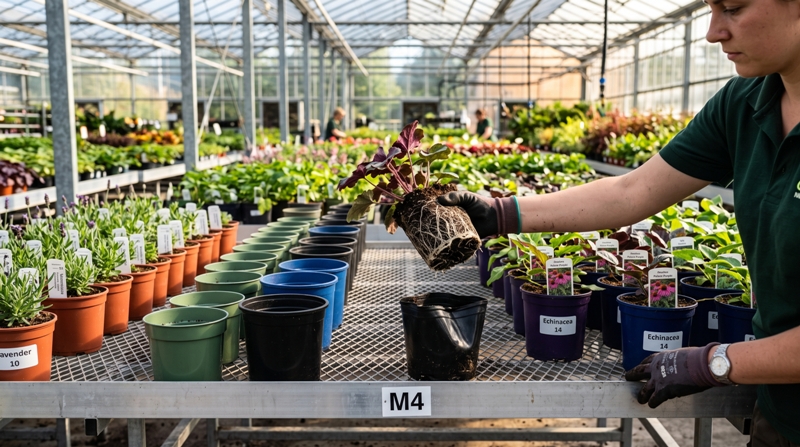
In commercial horticulture across Iraq, Jordan, and the broader Middle East, container nursery production is expanding rapidly. Whether growing potted ornamentals, fruit tree saplings, or stepping up vegetable transplants (tomatoes, cucumbers, and peppers) from seed trays into intermediate growing containers, choosing the right plastic pots for commercial nurseries directly determines root health and crop survival.
During peak summer months, ambient air temperatures inside nursery shade-houses and greenhouses routinely exceed 42°C to 48°C (107°F–118°F). Under these punishing environmental conditions, the root zone inside a container becomes a high-risk thermal pocket. Traditional rigid containers frequently trap heat, absorb radiant solar energy, and cause severe feeder root scorch along the inner pot walls.
Furthermore, when workers transplant young nursery crops into larger pots or field soil, stiff, low-grade plastic containers often crack under heat stress or tear delicate root balls during extraction. By transitioning to engineered, flexible (jelly) and color-optimized plastic pots for commercial nurseries, growers can eliminate root zone heat stress, prevent transplant damage, and maximize operational labor efficiency.
The Root Scorch Factor: Heat Absorption vs. Container Mechanics
Unlike open field soil, which provides a massive continuous thermal sink, substrate inside a potted container is completely surrounded by ambient air and direct solar radiation. The choice of container material, flexibility, and wall color directly impacts the micro-climate of the root zone:
-
Thermal Wall Overheating: Standard dark or thin-walled pots absorb high levels of solar radiation. Under direct sunlight, substrate temperatures against the inner wall can reach 55°C (131°F), effectively cooking fragile tender root tips and causing immediate plant wilting.
-
Root Ball Tearing during Extraction: Rigid, brittle plastic pots do not yield when squeezed. Workers attempting to pop out root plugs are forced to pull plants by the main stem, snapping fine feeder roots and causing severe post-transplant shock.
-
Salinity Accumulation (EC Spike): In arid climates with high water evaporation rates, improper bottom drainage holes cause toxic salt accumulation (high Electrical Conductivity) at the base of the pot, burning lower root structures.
According to nursery management research published by the Food and Agriculture Organization (FAO), managing root-zone container temperatures and preventing root shearing during repotting increases overall nursery crop establishment by up to 35%.
Rigid vs. Flexible Jelly Pots: Technical Application Guide
Selecting the appropriate container specification—ranging from size 8 cm to size 16 cm and choosing between flexible jelly or rigid plastic polymer blends—depends on the crop cycle stage and handling practices.
| Pot Type / Category | Size Range (Diameter) | Structural Properties | Primary Commercial Advantage | Best Recommended Use |
|---|---|---|---|---|
| Flexible Jelly Pots | Sizes 8, 10, 12, 14 cm | Highly elastic, squeezable polymer blend | Effortless root plug popping without root tearing or pot cracking | High-density vegetable seedling stepping & short-cycle nursery crops |
| Standard Plastic Pots | Sizes 12, 14, 16+ cm | Semi-rigid UV-stabilized structure | Stackable rim design with high structural stack loading strength | Intermediate tree saplings, ornamentals, and long-stage container crops |
| Color-Customized Pots | Custom Sizes (8–16 cm) | Reflective outer pigments (Transparent to Colored) | Reduces radiant solar heat absorption in unshaded outdoor benches | High-heat summer nursery production in arid environments |
To explore technical specifications and customizable bulk order options, view our official Mayadasht Plastic Pots page.
Optimizing Substrate and Drainage Integration
To maximize the performance of plastic pots for commercial nurseries, container mechanics must be paired with high-porosity growing media:
-
Multilevel Drainage Hole Architecture: High-quality pots feature dual-tier bottom drainage holes that prevent soil clogging and allow excess water and accumulated salts to flush freely, maintaining a balanced root zone EC.
-
Thermal Sponge Substrates (Cocopeat & Perlite): Combining pots with low-EC Mayadasht Cocopeat Substrates and 30% Horticultural Perlite creates a high-water-capacity matrix that buffers roots against rapid drying under extreme summer heat.
-
Elevated Bench Placement: Placing containers on raised wire benches promotes air circulation beneath the pot bottom, encouraging air-pruning and preventing root rot pathogens like Pythium.
Troubleshooting Container Nursery Production Challenges
| Observed Issue | Underlying Cause | Agronomic & Hardware Solution |
|---|---|---|
| Root Scorch & Outer Root Death | Excessive solar heat absorption through thin dark pot walls | Switch to light-colored or reflective plastic pots to bounce off radiant solar heat. |
| High Rate of Pot Cracking & Waste | Brittle recycled polymers degrading under intense UV exposure | Utilize flexible UV-stabilized jelly pots that flex under pressure without cracking. |
| Transplant Shock & Stunted Growth | Root ball torn during forced extraction from rigid containers | Use squeezable jelly pots (Sizes 8–12) to pop out root plugs smoothly without root damage. |
Frequently Asked Questions (FAQ)
Why are flexible jelly pots superior to rigid plastic pots for young seedling stepping?
Flexible jelly pots are manufactured from highly elastic polymer blends. Workers can gently squeeze the sides of the pot to loosen the substrate plug, allowing the plant to pop out effortlessly without snapping delicate feeder roots or cracking the pot itself.
How does pot color affect root zone temperature in hot climates?
Standard black pots absorb high amounts of solar radiation, elevating root zone temperatures up to 10°C higher than ambient air. Utilizing lighter or custom-colored plastic pots reflects solar heat, protecting feeder roots from heat-induced necrosis during summer months.
What pot sizes (8 to 16 cm) are best suited for commercial nursery production?
-
Sizes 8–10 cm: Ideal for initial seedling stepping from seed trays, small ornamentals, and herb propagation.
-
Sizes 12–14 cm: Perfect for intermediate stage tomato, pepper, and cucumber transplants prior to final field or greenhouse placement.
-
Sizes 16+ cm: Suited for larger potted plants, fruit tree saplings, and long-cycle container crops.
Upgrade Your Commercial Nursery Efficiency with Mayadasht
Eliminating root heat stress and maximizing nursery survival rates requires durable, professional container solutions tailored for demanding climates. Mayadasht manufactures and exports high-grade agricultural supplies designed specifically for commercial nurseries across Iraq and the Middle East:
-
Flexible Jelly Pots & Rigid Plastic Containers (Sizes 8 to 16+)
-
Custom Color Pigmentation & UV-Stabilized Polymer Formulations
-
High-Porosity Low-EC Cocopeat & Horticultural Perlite
-
UV-Stabilized Seed Trays, Greenhouse Twine & Sticky Trap Cards
📩 Planning your upcoming nursery production cycle?
Contact the Mayadasht Export Team today to request technical specifications, custom color options, product samples, and direct commercial delivery quotes.