
 Persian
 Arabic
 Russian


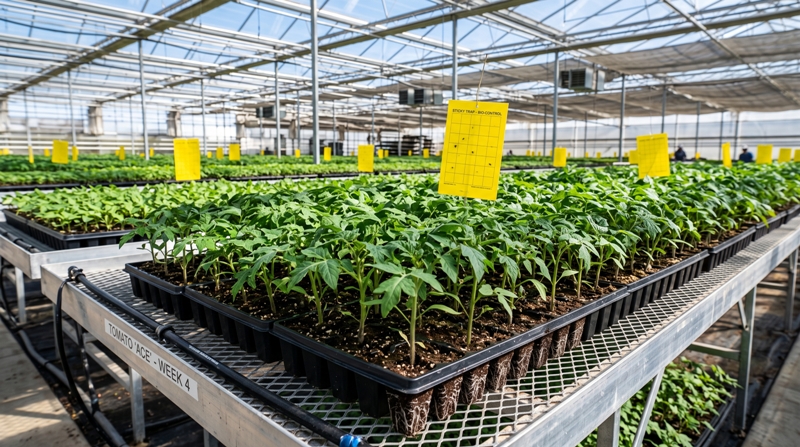
In commercial horticulture across the Middle East—particularly in regions like Iraq, Kuwait, and southern Iran—summer temperatures inside greenhouses routinely exceed 40°C to 45°C (104°F–113°F). Maintaining high seedling survival in hot climates is one of the most critical operational challenges for vegetable growers and nursery managers.
High atmospheric heat accelerates transpiration, rapidly desiccates root zones, reduces oxygen availability in substrates, and triggers severe transplant shock. Consequently, many nurseries report seedling loss rates between 25% and 40% during peak hot months, severely impacting operational profitability.
Achieving a 90%+ seedling survival rate under extreme heat requires an integrated propagation strategy. According to heat-stress mitigation studies by the Food and Agriculture Organization (FAO), combining controlled root environments with physical barriers significantly reduces abiotic plant stress.
Challenge 1: Heat Shock and Substrate Desiccation
When ambient temperatures surge, small propagation cells lose moisture exponentially faster than field soil. In standard shallow trays or low-grade plastic containers, heat builds up rapidly within the root cavity, causing root tip burn.
Substrate Matrix for Seedling Survival in Hot Climates
Traditional field soil or heavy peat moss tends to compact and form a hard crust under intense heat. To safeguard young root systems, commercial propagation requires a specialized coir-perlite matrix:
-
High Water-Retention Capacity (Cocopeat): Premium horticultural-grade Cocopeat absorbs up to 8–10 times its weight in water, creating a reliable moisture reservoir that shields roots during peak daily heat spikes.
-
Thermal Insulation & Aeration (Expanded Perlite): Blending 20% to 30% Horticultural Perlite into the cocopeat matrix creates structural macro-pores. This prevents compaction and maintains critical root oxygenation even when wet.
-
EC and pH Stability: High ambient heat amplifies salt toxicity. Utilizing low-EC, washed cocopeat ensures tender embryonic roots are not scorched by salt accumulation.
Challenge 2: Aeration, Root Spiraling, and Disease Control
High temperatures combined with overhead irrigation create humid micro-climates at the tray level—ideal conditions for fungal pathogens like Pythium and Fusarium (Damping-Off disease).
+---------------------------------------------------------------------------------+
|                       SEEDLING PROPAGATION TRIAD                                |
|                                                                                 |
|   [ UV-Stabilized Seed Trays ] -----> Air-Pruning & Uniform Root Drainage      |
|   [ Cocopeat-Perlite Matrix  ] -----> Thermal Buffer & Water Retention          |
|   [ Yellow & Blue Sticky Traps] ----> Chemical-Free Early Vector Protection     |
+---------------------------------------------------------------------------------+
Heavy-Duty UV-Stabilized Seed Trays
The physical architecture of your propagation tray directly influences seedling survival in hot climates.
-
Cell Geometry & Wall Ribbing: High-performance Mayadasht Seed Trays feature internal vertical ridges (root-guiding ribs) that direct root growth downward toward the drainage hole, preventing spiraling.
-
Bottom Air-Pruning Holes: Large, clean drainage openings allow natural air-pruning. When root tips reach the bottom opening, exposure to dry air stops their linear growth and stimulates dense lateral root branching.
-
Structural Durability under UV Light: Intense sun quickly degrades cheap recycled plastics. Utilizing UV-stabilized virgin HDPE/PP trays ensures thermal resistance and multi-season reusability.
Challenge 3: Early Vector-Borne Pest Outbreaks
Young seedlings are magnet targets for sap-sucking insects. In warm, dry climates, pests like Whiteflies, Thrips, and Aphids multiply rapidly.
+-------------------------------------------------------------------------+
|                      PEST MONITORING & CONTROL STRATEGY                 |
+--------------------------+----------------------------------------------+
| Pest Target              | Mechanical Control Solution                  |
+--------------------------+----------------------------------------------+
| Whiteflies, Aphids,      | Yellow Sticky Trap Cards                     |
| Leafminers, Fungus Gnats | (Hung 10-15 cm above seedling canopy)        |
+--------------------------+----------------------------------------------+
| Thrips (*Frankliniella*) | Blue Sticky Trap Cards                       |
|                          | (Positioned near nursery entrances & vents)  |
+--------------------------+----------------------------------------------+
Integrated Physical Trapping (Yellow & Blue Sticky Cards)
Deploying high-tack Yellow & Blue Sticky Cards directly over your propagation benches offers a dual advantage:
-
Early Detection & Monitoring: Catching pest incursions early allows growers to take targeted action before infestations spread.
-
Mass Trapping without Chemical Stress: Yellow cards trap adult whiteflies before they lay eggs, while blue cards specifically capture thrips, protecting delicate leaf tissue without spraying chemicals.
Step-by-Step Protocol for Maximizing Seedling Survival in Hot Climates
-
Substrate Blending: Mix 70% low-EC Cocopeat with 30% Perlite (3–5mm grade). Ensure moisture content is around 60% before filling trays.
-
Tray Filling & Seeding: Fill Mayadasht Seed Trays evenly without over-compacting. Dibble seeds to a depth equal to twice the seed diameter.
-
Bench Elevation: Place seed trays on elevated metal benches at least 30–50 cm off the floor to promote airflow beneath the tray bottom for effective air-pruning.
-
Pest Barrier Installation: Hang yellow sticky traps every 3 to 5 meters along propagation benches at a height of 10–15 cm above the seedling canopy. Place blue sticky traps near doors and ventilation pads.
-
Crop Support Readiness: For vining crops like cucumbers and tomatoes, ensure your Greenhouse Twine and Plant Clips are prepped for immediate trellising upon field transplant to eliminate handling stress.
Frequently Asked Questions (FAQ)
Q1: Which seed tray cell size is best for tomato and cucumber seedlings in hot climates?
For tomatoes, 105-cell or 128-cell trays offer an ideal balance of root volume and moisture retention. For larger seeds like cucumbers and squash, 50-cell or 72-cell trays are recommended to accommodate fast-growing root systems.
Q2: Why is pure peat moss not ideal for summer nursery propagation in the Middle East?
Pure peat moss becomes hydrophobic (water-repellent) once it dries out under extreme heat. Blending Cocopeat and Perlite maintains rewettability and structural pore space even under high evaporation rates.
Q3: How frequently should yellow sticky cards be replaced in a greenhouse nursery?
Replace sticky cards every 3 to 4 weeks, or sooner if more than 70% of the surface is covered with trapped insects or dust.
Scale Your Commercial Nursery with Mayadasht
Achieving maximum seedling survival in hot climates requires high-quality, reliable inputs engineered for tough conditions. Mayadasht provides commercial nurseries across Iraq and the Middle East with export-grade agricultural supplies:
-
UV-Stabilized Seed Trays & Growing Containers
-
Premium Low-EC Cocopeat & Horticultural Perlite
-
High-Tack Yellow & Blue Sticky Trap Cards
-
Heavy-Duty Greenhouse Twine, Roller Hooks & Plant Clips
📩 Planning your next propagation season?
Contact the Mayadasht Export Team today to request product specifications, bulk pricing, and custom shipping options for Iraq and regional markets.