
 Persian
 Arabic
 Russian



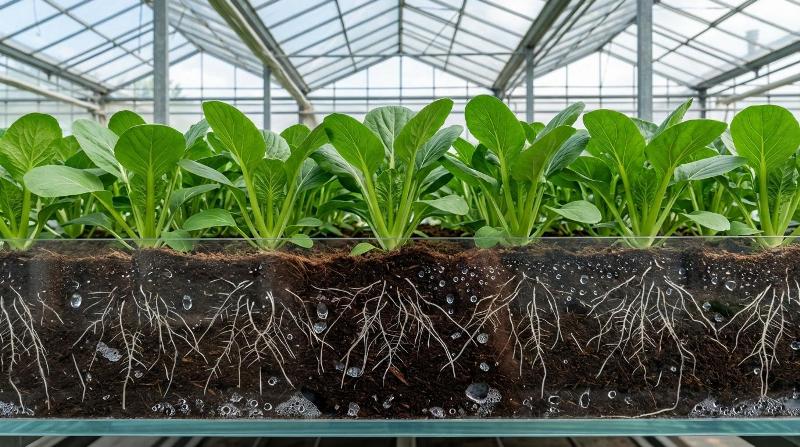
In commercial agriculture, most decisions are made long before seeds touch the soil.
While yield is often discussed at harvest, profitability is quietly shaped at the planning stage—through the selection of agricultural inputs that define system stability.
For growers and agricultural traders, this distinction matters more than ever.
The Hidden Cost of Input-Based Decisions
Low-cost inputs rarely fail immediately.
Growing media, greenhouse covers, and structural materials often perform adequately during early stages of cultivation.
Problems usually emerge later:
- inconsistent root development
- unstable moisture distribution
- rising corrective labor
- unpredictable climate behavior inside the greenhouse
By the time these issues appear, alternatives are no longer feasible.
Inputs Are Not Products — They Are System Components
Professional growers do not evaluate cocopeat, peat moss, or greenhouse films as isolated items.
They evaluate how these inputs interact within a production system.
Growing media influences:
- root oxygen availability
- nutrient retention
- irrigation efficiency
Greenhouse covers influence:
- temperature buffering
- humidity stability
- light diffusion
Each decision affects the next.
Why Consistency Matters More Than Price
Price differences between input suppliers are often marginal when viewed per unit.
However, inconsistency across batches, variable processing quality, or lack of technical guidance creates compounding costs over time.
Experienced operators understand that:
- predictability reduces management stress
- stable inputs simplify irrigation and fertigation programs
- fewer corrections protect labor efficiency
These benefits rarely appear on invoices—but they define profitability.
The Role of Growing Media in Risk Management
Cocopeat, coco chips, and peat-based substrates do not simply support plants.
They regulate the most sensitive zone of production: the root environment.
When root zones remain stable:
- nutrient uptake improves
- water use becomes more efficient
- crop variability decreases
In contrast, unstable substrates amplify external stress, especially under high temperatures or water constraints.
Structural Materials Shape the Entire Season
Greenhouse covers are often selected based on upfront cost.
Yet they influence daily microclimate behavior for months.
Light diffusion, thermal insulation, and durability determine whether a greenhouse operates predictably—or reacts constantly to external conditions.
Over a full season, these effects outweigh initial savings.
Decision Framework for Serious Buyers
Before selecting agricultural input suppliers, informed buyers ask:
- How is quality controlled across production batches?
- What standards define processing and packaging?
- Is technical support available beyond delivery?
These questions signal a shift from transactional buying to strategic sourcing.
Final Perspective
Agricultural inputs rarely increase profit by themselves.
They protect profit by minimizing instability.
Growers and traders who recognize this do not search for the cheapest materials.
They search for systems that perform reliably—under pressure, over time, and across seasons.