
 Persian
 Arabic
 Russian



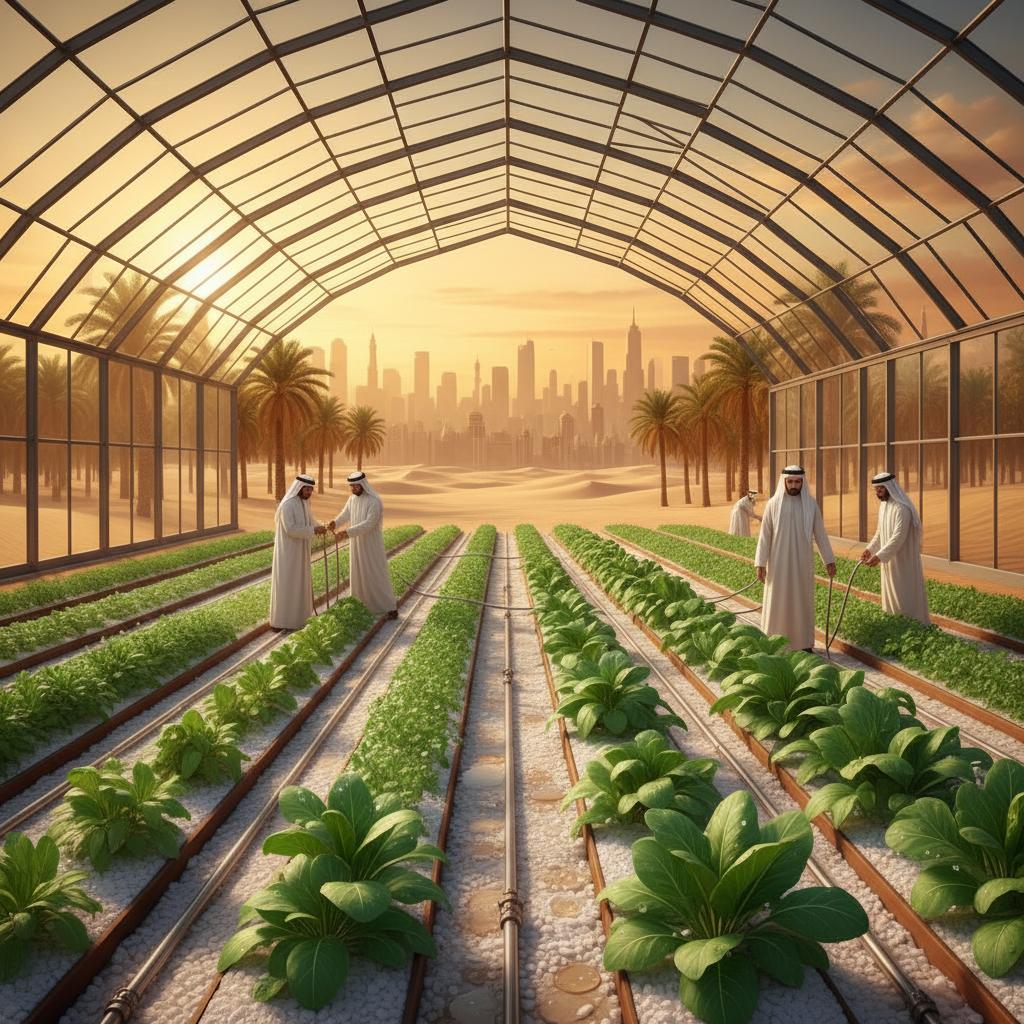
Agriculture in UAE, Saudi Arabia, Oman, Qatar, Bahrain, and Kuwait faces some of the toughest farming conditions in the world:
- Extremely high temperatures
- Water scarcity and heavy reliance on desalinated water
- Saline and poor-quality soils
- Seasonal dependence on imported fruits and vegetables
To overcome these challenges, farmers and agri-investors are increasingly turning to perlite — a natural volcanic mineral with unique properties for improving plant growth, water management, and soil structure.
Why Perlite Works for Agriculture in This Region
Perlite is lightweight, porous, and sterile — formed when volcanic glass is heated to high temperatures and expands up to 13 times its volume. These properties make it one of the most effective materials for controlled-environment agriculture in arid climates.
Key Benefits:
- High Water Retention – Stores water and gradually releases it to roots, reducing irrigation by 30–50%.
- Excellent Aeration – Prevents root suffocation and boosts nutrient uptake.
- Soil Improvement – Helps leach salts from the root zone, crucial for desert farms near coastal areas.
- Lightweight for Easy Handling – Ideal for rooftop gardens and hydroponics.
- Long-Lasting – Does not decompose, reusable for multiple crop cycles.
Applications in Arab Agriculture
- Greenhouse Farming: Widely used in UAE and Qatar for tomatoes, cucumbers, and peppers.
- Hydroponics & Vertical Farming: Saudi Arabia and Oman invest heavily in systems using perlite as the main substrate.
- Soil Amendment: Improves heavy clay soils in oasis farms in Eastern Saudi Arabia and Oman’s Al Batinah region.
- Nurseries & Landscaping: Bahrain uses perlite in ornamental plants and turf establishment for urban greening projects.
Country-Specific Adoption
UAE
- Focus on vertical farming and climate-controlled greenhouses.
- Adoption in Abu Dhabi and Dubai driven by water savings and disease reduction.
Saudi Arabia
- Large-scale greenhouse complexes in Al-Qassim and Al-Jouf use perlite to save water and reduce soil-borne diseases.
Oman
- Uses perlite in greenhouses and desalinated water-efficient irrigation systems.
Qatar & Kuwait
- Invest in urban farming with perlite due to its lightweight nature and insulation.
Bahrain
- Applies perlite in hydroponic lettuce production and nurseries, reducing root diseases and improving crop quality.
Challenges for Wider Perlite Use
- High Initial Cost – More expensive than local materials but lasts longer.
- Import Dependence – Most perlite is imported from Turkey, Iran, or Greece.
- Farmer Training – Requires knowledge of proper water and nutrient management.
- Environmental Impact – Mining and processing must follow sustainable practices.
Will Arab Countries Adopt Perlite More Widely?
Signs point to strong growth:
- Governments prioritizing food security and sustainable agriculture.
- Water-saving tech like perlite included in subsidies and investment programs.
- Private agri-tech companies pushing greenhouse and vertical farming adoption.
UAE and Saudi Arabia are already leaders in large-scale perlite use. Oman, Bahrain, and Qatar are expanding, especially in hydroponics and nurseries. Kuwait is exploring it for rooftop farming under urban greening policies.
Conclusion
Perlite offers a sustainable solution for water scarcity, poor soils, and heat stress in Middle Eastern Arab countries. As the push for local food production grows, the role of perlite will only expand.
📌 Learn more about our Premium Agricultural Perlite and explore how it can transform your farm or greenhouse.
Contact us for free consultation to design solutions tailored to your needs.