
 Persian
 Arabic
 Russian



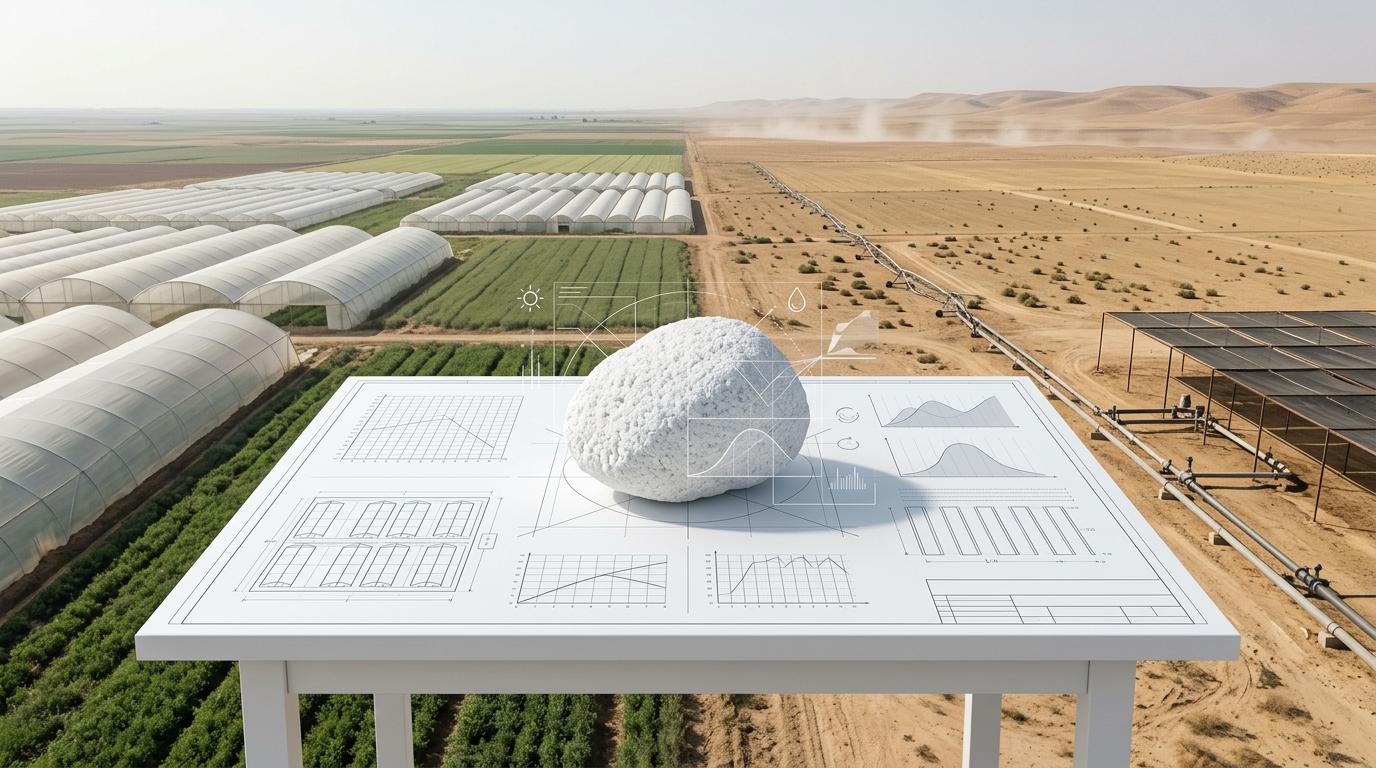
Perlite Demand in Iraq: A Signal, Not a Trend
The sharp increase in Arabic searches for البرلايت الزراعي across Iraq is not accidental. It reflects a structural shift in Iraqi agriculture—one driven by rising temperatures, increasing pressure on water resources, and a gradual move toward controlled and intensive production systems.
Iraqi growers are no longer asking what input is cheaper. They are asking which input reduces risk.
In this context, perlite is no longer perceived as a supplementary material. It is increasingly evaluated as a technical solution for managing root‑zone behavior under stress.
The Iraqi Root‑Zone Problem
Most cultivated soils in Iraq—particularly in central and southern regions—suffer from compaction, poor aeration, salinity buildup, or irregular water availability. These factors directly affect root respiration, nutrient uptake, and plant resilience during hot months.
Greenhouse systems amplify these challenges. High temperatures, rapid evapotranspiration, and fertigation dependency mean that root‑zone failure often precedes visible crop failure.
Perlite directly addresses this weak point.
What Perlite Actually Solves (Beyond the Basics)
Perlite is often described using generic terms such as “lightweight” or “good drainage.” These descriptions are technically correct—but strategically insufficient.
In Iraqi agricultural systems, perlite’s real value lies in three deeper functions:
First, oxygen stability. Even under frequent irrigation, perlite maintains air-filled porosity. This is critical in warm climates where oxygen depletion around roots accelerates rapidly.
Second, salinity control. In regions where irrigation water contains moderate to high dissolved salts, perlite’s drainage behavior reduces salt accumulation in the root zone—something traditional soils and many organic substrates struggle to achieve.
Third, predictability. Perlite behaves consistently. In greenhouse production, predictability is not convenience—it is risk control.
Why Perlite Fits Iraq’s Move Toward Modern Agriculture
Iraq is gradually expanding greenhouse cultivation, seedling production, and high-value vegetable and fruit systems. These systems demand substrates that respond well to fertigation, allow precise control, and perform reliably during peak summer stress.
Perlite aligns naturally with these requirements.
It does not replace agronomic knowledge; it amplifies it. Where irrigation scheduling, nutrient management, and climate control are improving, perlite acts as a stabilizing platform rather than a limiting factor.
The Common Mistake: Treating Perlite as a Commodity
One of the most frequent failures we observe in the Iraqi market is the misapplication of perlite—wrong particle size, unsuitable blending ratios, or lack of adaptation to local water quality and crop type.
Perlite is not a one‑size‑fits‑all input.
Used correctly, it improves yield stability, root health, and system efficiency. Used incorrectly, it becomes an expensive disappointment.
This is where most suppliers stop—and where real solutions begin.
From Supplying Material to Delivering Solutions
In recent months, we have supported two Iraqi agricultural clients in sourcing and exporting perlite from Iran, not as a standalone product, but as part of a root‑zone strategy adapted to their production systems.
The difference was not the material itself.
It was the decision framework behind it.
Successful adoption of perlite in Iraq depends on understanding:
- local climate intensity,
- irrigation reliability,
- crop sensitivity,
- and production goals.
Without this context, perlite is just white rock.
With it, perlite becomes a system upgrade.
A Strategic View Forward
The rising interest in perlite across Iraq signals a market ready for technical dialogue—not marketing slogans.
As Iraqi agriculture faces hotter summers, tighter water constraints, and higher economic pressure, inputs that increase system resilience will outperform those that merely promise growth.
Perlite belongs to this category—but only when deployed with intent.
Final Note | We Don’t Just Sell Perlite. We Design Root‑Zone Solutions.
At Mayadasht, our role in the Iraqi market is not limited to exporting agricultural materials.
We work with growers, consultants, and project developers to design root‑zone solutions that fit real Iraqi conditions.
If you are evaluating perlite for greenhouse or intensive production in Iraq and want to avoid costly trial‑and‑error, our consultants and technical specialists are ready to help—free of charge.
👉 Contact Mayadasht for a complimentary technical consultation
Let’s determine whether perlite is right for your system—and how to use it correctly.
Mayadasht | Agricultural solutions, not just products.